Monite - Building embedded finance
Monite - Building embedded finance
Led the product, system and brand behind embedded AP, AR and Expense Management for third party financial apps & systems. Acquired by OakNorth.
Led the product, system and brand behind embedded AP, AR and Expense Management for third party financial apps & systems. Acquired by OakNorth.
Led the product, system and brand behind embedded AP, AR and Expense Management for third party financial apps & systems. Acquired by OakNorth.
- Role
- Head of Design
- Responsibility
- Product · Brand · Design Systems
- Timeline
- Dec 2024 — Nov 2025
- Outcome
- Acquired by OakNorth
- Role
- Head of Design
- Responsibility
- Product · Brand · Design Systems
- Timeline
- Dec 2024 — Nov 2025
- Outcome
- Acquired by OakNorth
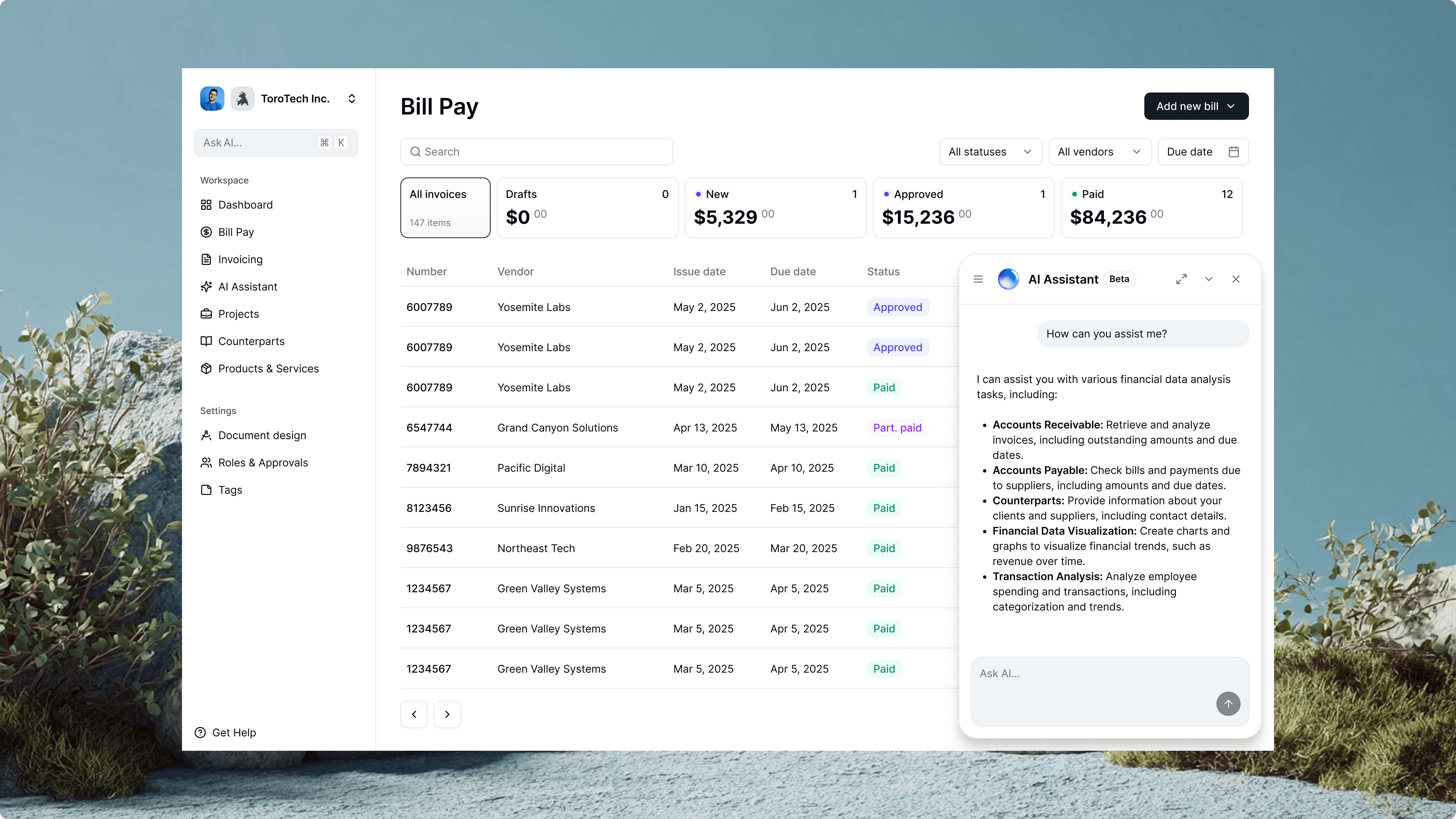
Monite enabled banks and fintechs to embed Accounts Payable, Accounts Receivable and Expense Management directly into their Business Banking products.
The design challenge was to create workflows that could handle real financial complexity while adapting to different products, markets and brands.
As Head of Design, I led product design and brand across Monite, managing two Senior Product Designers and working directly with product and engineering across the platform.
My remit covered the product experience, AI interactions, design system, SDK implementation and brand — from defining the direction through to hands-on UX and UI.
A redesigned embedded-finance platform, a new SDK-aligned design system, AI-native financial workflows and a rebuilt brand and web presence.
Monite was acquired by OakNorth in 2025.
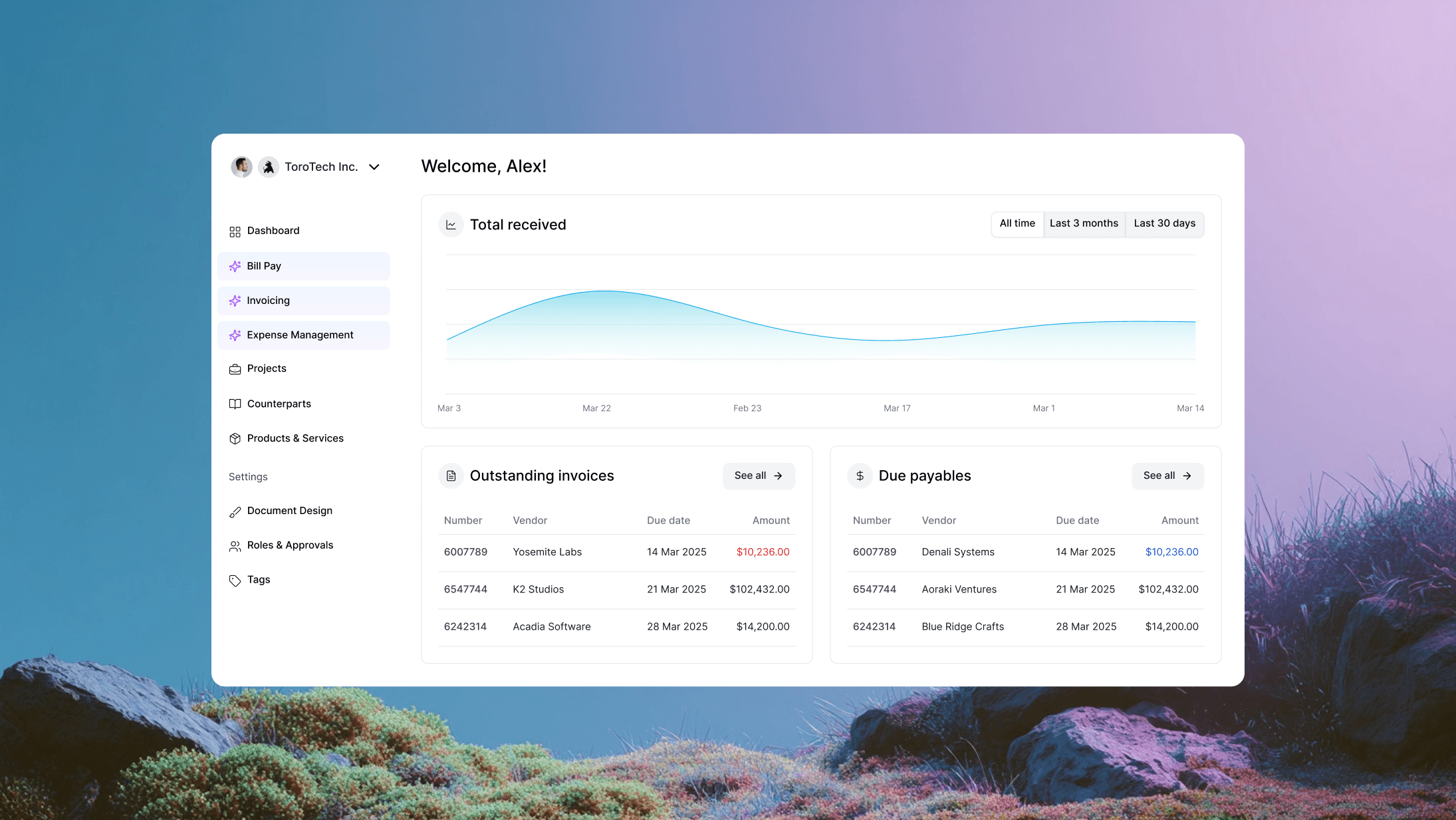
AP, AR and Expense Management had different jobs, but they couldn't feel like three unrelated products.
I led the move towards a shared product model across navigation, data, actions and interaction patterns — giving users a consistent way to understand what needed attention and what they could do next
AP, AR and Expense Management had different jobs, but they couldn’t feel like three unrelated products.
I led the move towards a shared product model across navigation, data, actions and interaction patterns — giving users a consistent way to understand what needed attention and what they could do next
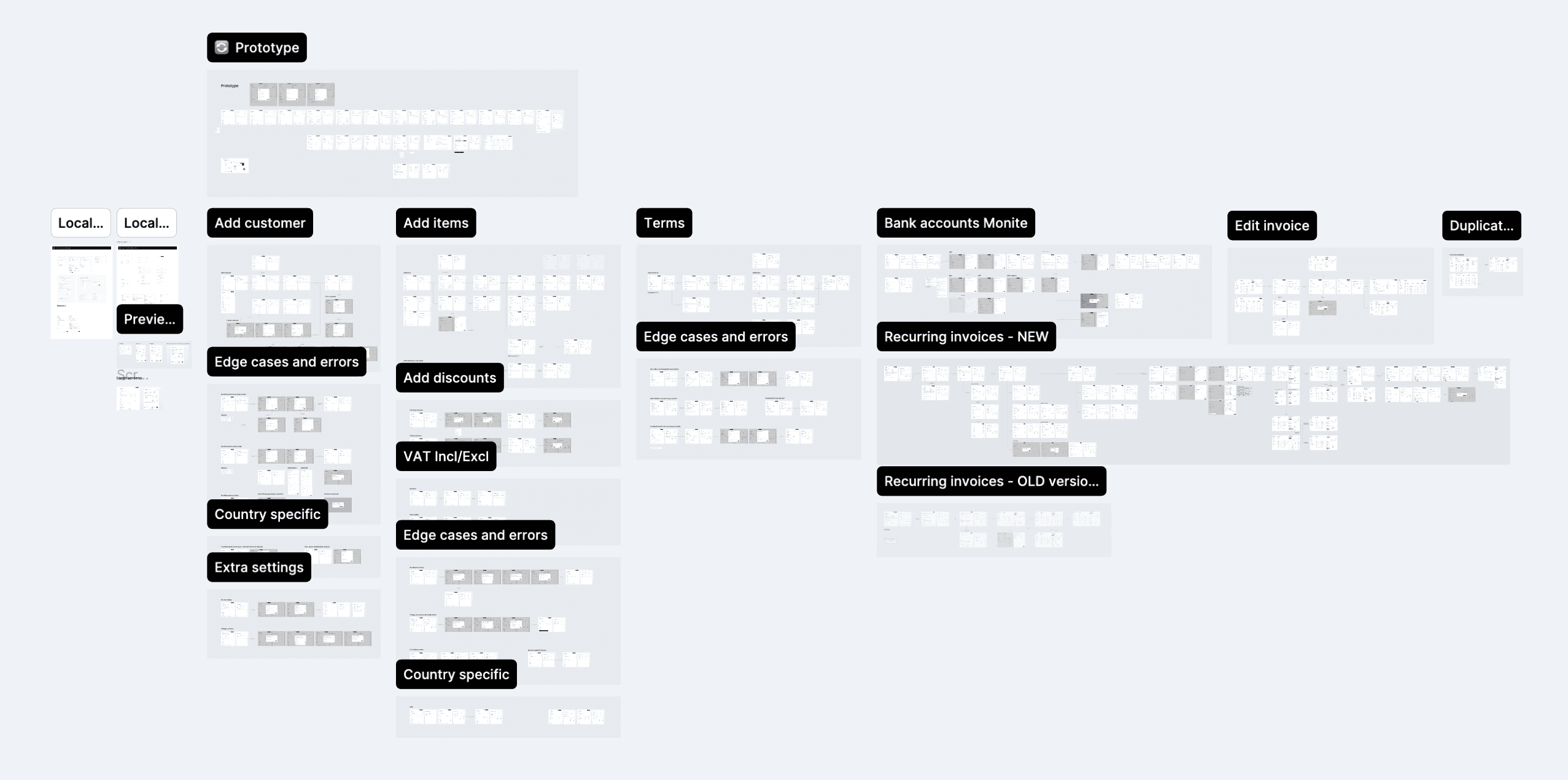
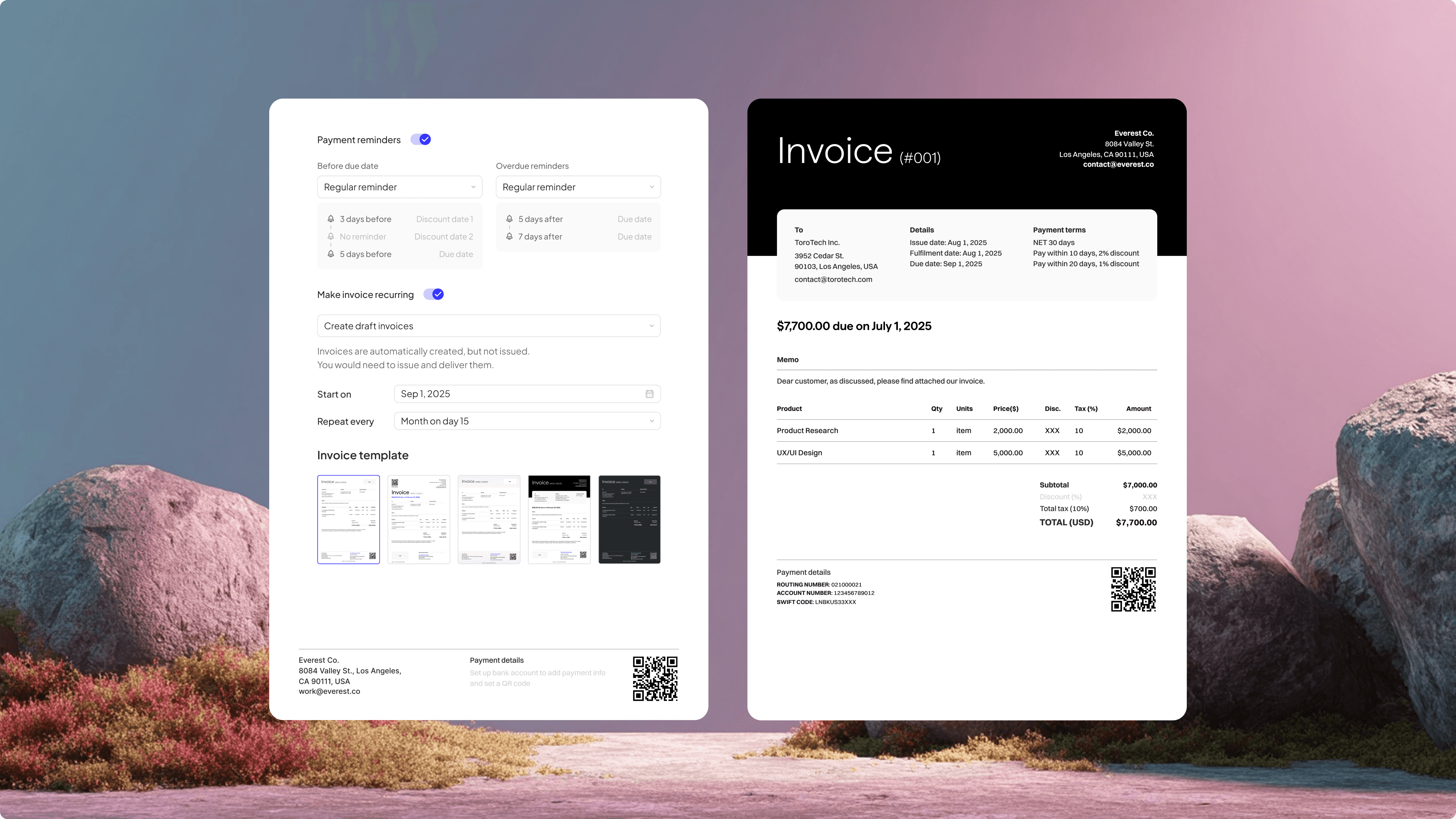
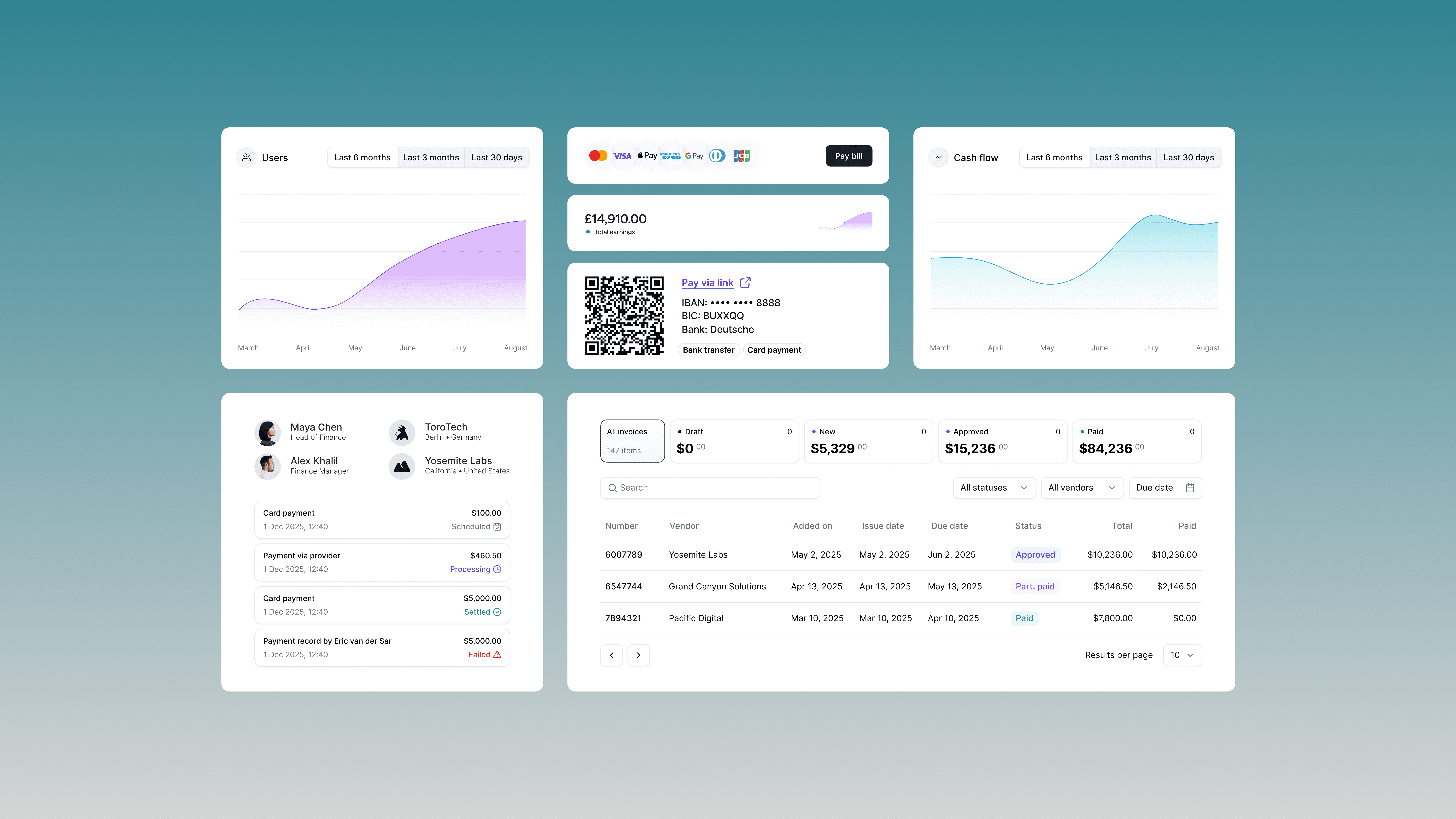
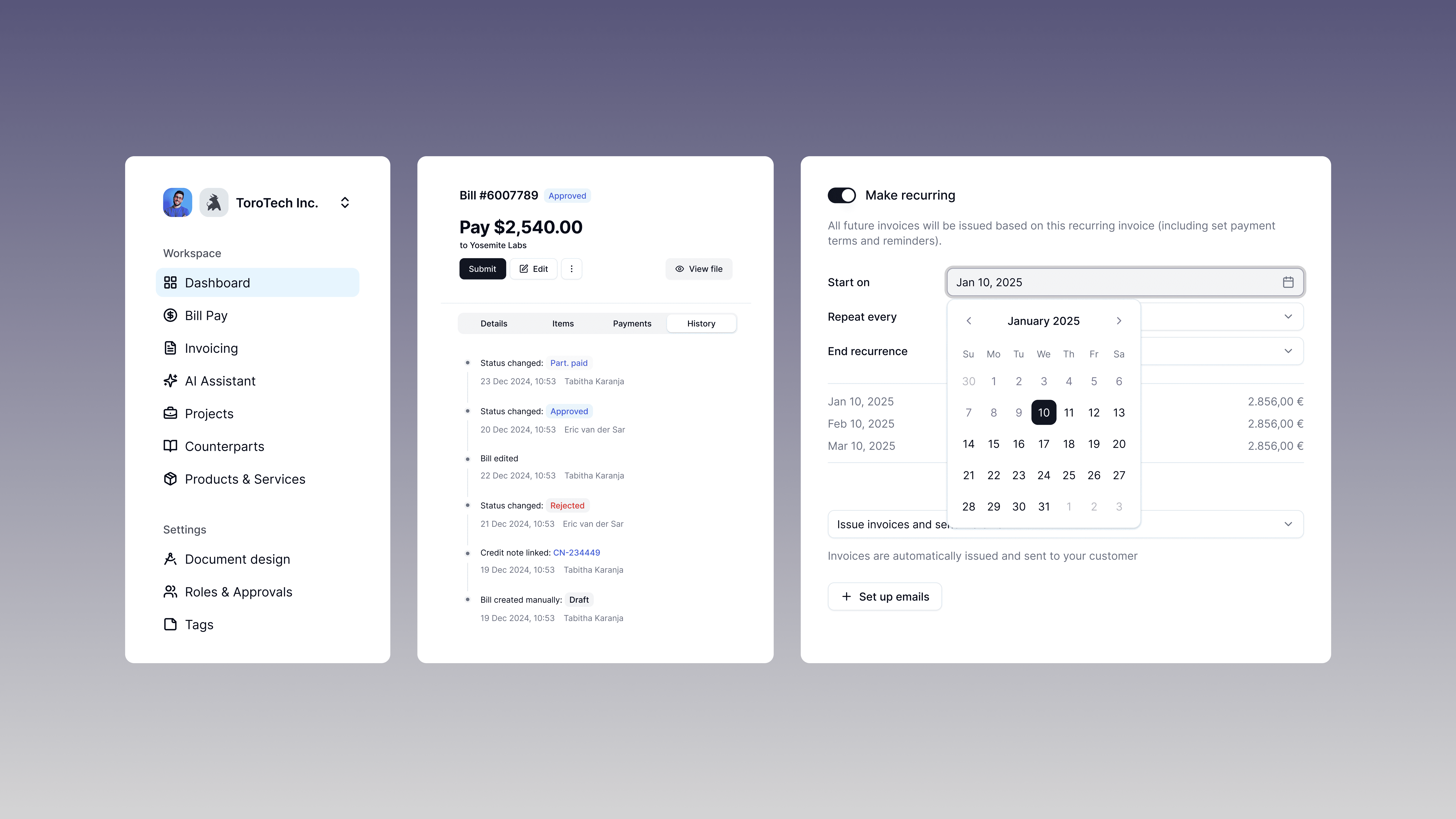
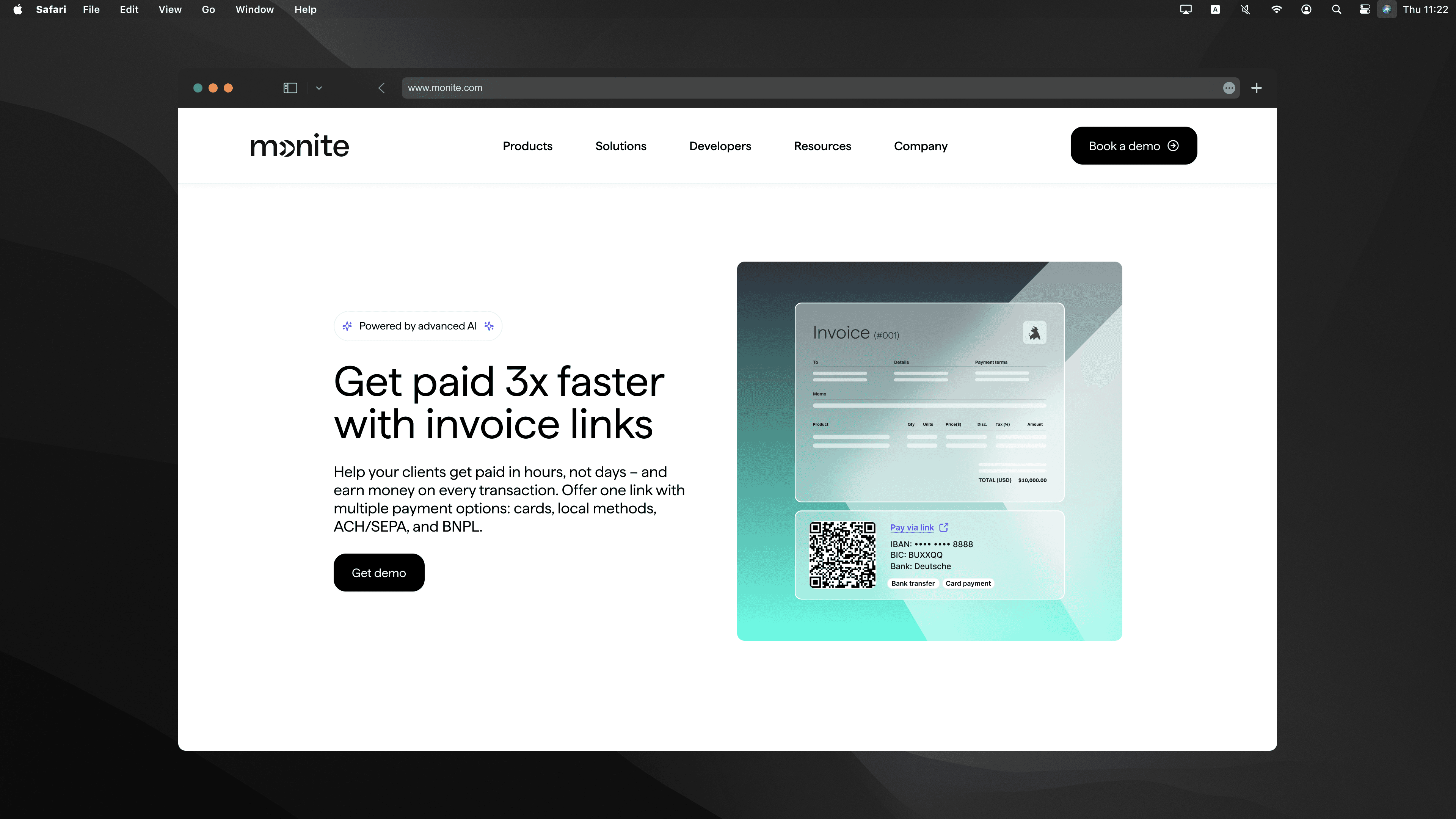
AR covered the full receivables lifecycle: creating customers and products, generating quotes and invoices, recurring billing, payment collection and reconciliation.
The UX needed to remain simple while accommodating regional differences in tax, payment terms, banking formats and e-invoicing requirements across Europe and North America.
AP took the opposite side of the ledger from bill ingestion through approval and payment.
The focus was reducing repetitive financial admin while keeping high-consequence actions explicit: bills could be captured automatically, routed through approval policies and paid through the appropriate payment rail without forcing users between systems.
Expense Management extended the same interaction language into employee spend, giving businesses a consistent model for controlling and understanding money moving across the organisation.
III - Designing AI into financial workflows
III - Designing AI into financial workflows
As the platform evolved, we explored where AI could remove work from financial operations rather than simply sit alongside them.
The important design question became how much of a financial task could safely move from navigation and forms into intent.
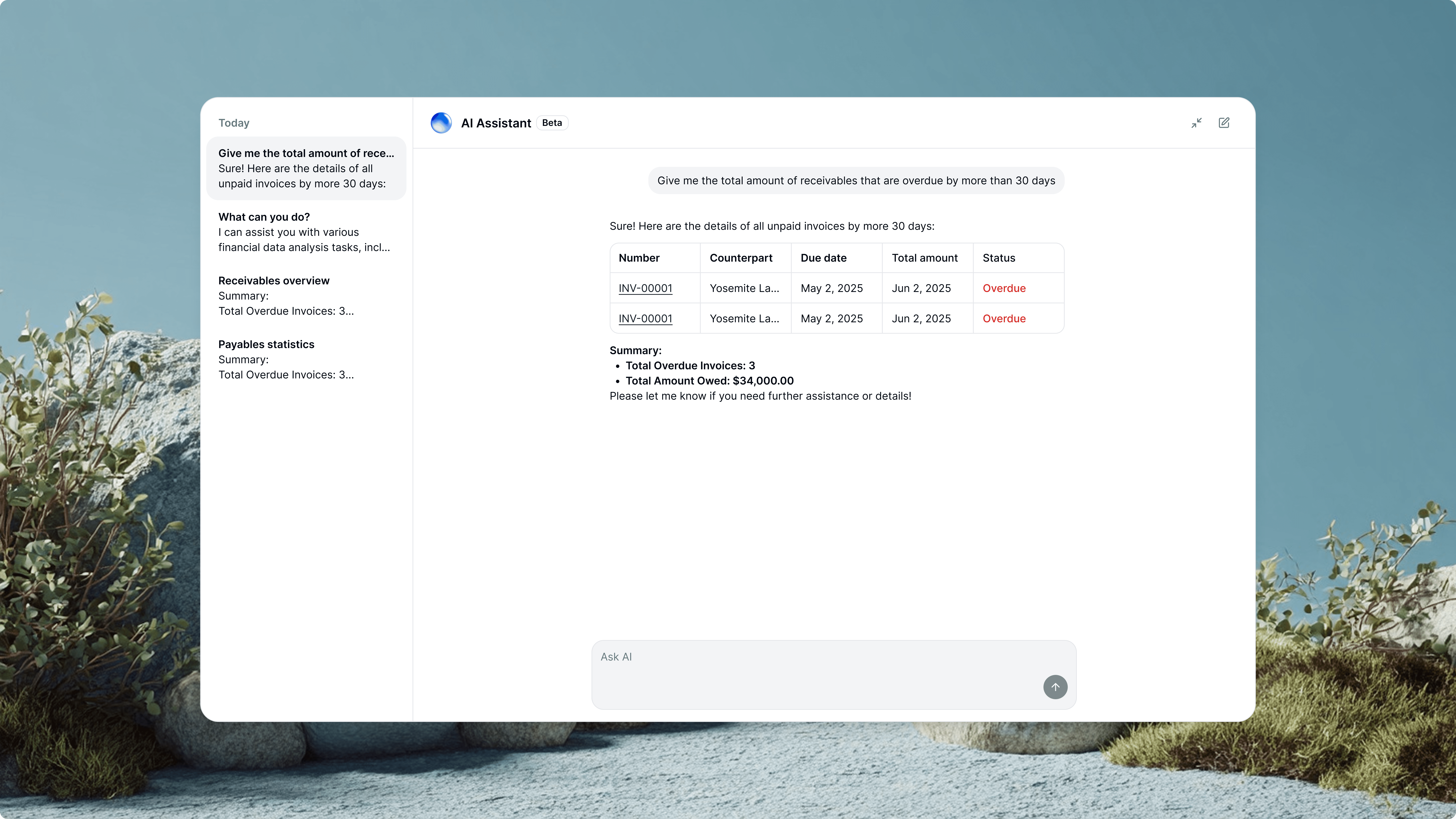
We designed agent-led flows capable of creating invoices and bills from natural-language requests, progressively gathering or confirming the information required to complete the task.
AI also appeared directly inside workflows, particularly around collections and financial actions, where the product could surface an issue alongside an appropriate next step.
This kept automation close to the underlying financial context rather than sending users somewhere else to ask for help.
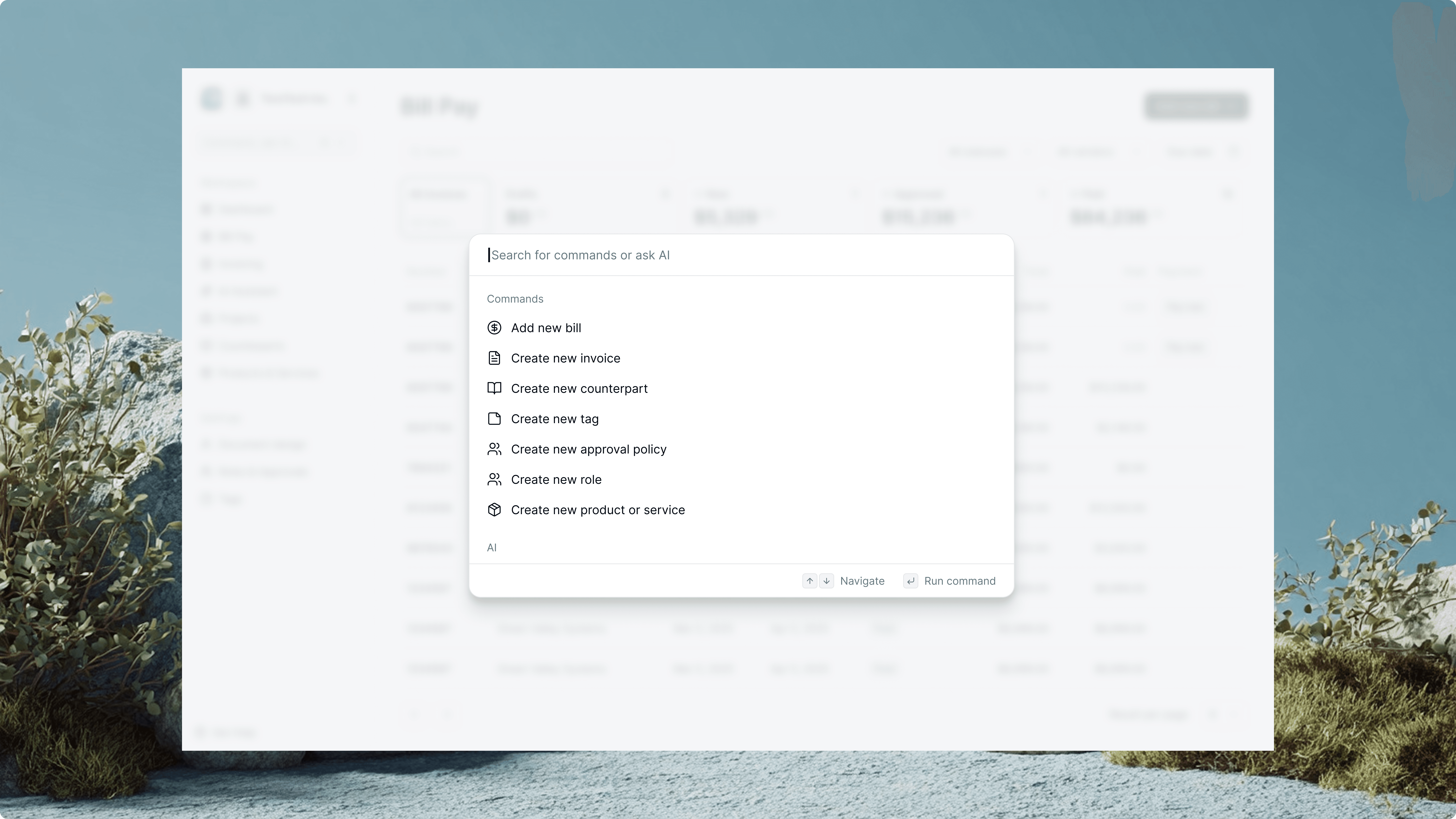
At platform level, we explored a central command system that allowed users to ask financial questions or initiate actions from anywhere in the product.
Designing the interaction meant accounting for more than the happy path: prompts, clarification, incomplete information, confirmation, responses and actions all needed defined states.
IV - An interface for every platform
IV - An interface for every platform
The design had an additional constraint: Monite shouldn't necessarily look like Monite.
The product was designed to sit inside Business Banking applications, so the underlying UX needed to remain consistent while allowing the surface layer to inherit the host product's brand.
Partners could adapt typography, colour, theming and components while retaining established interaction patterns and accessibility behaviour.
The design had an additional constraint: Monite shouldn’t necessarily look like Monite.
The product was designed to sit inside Business Banking applications, so the underlying UX needed to remain consistent while allowing the surface layer to inherit the host product’s brand.
Partners could adapt typography, colour, theming and components while retaining established interaction patterns and accessibility behaviour.
From Material UI to SDK-native
From Material UI to SDK-native
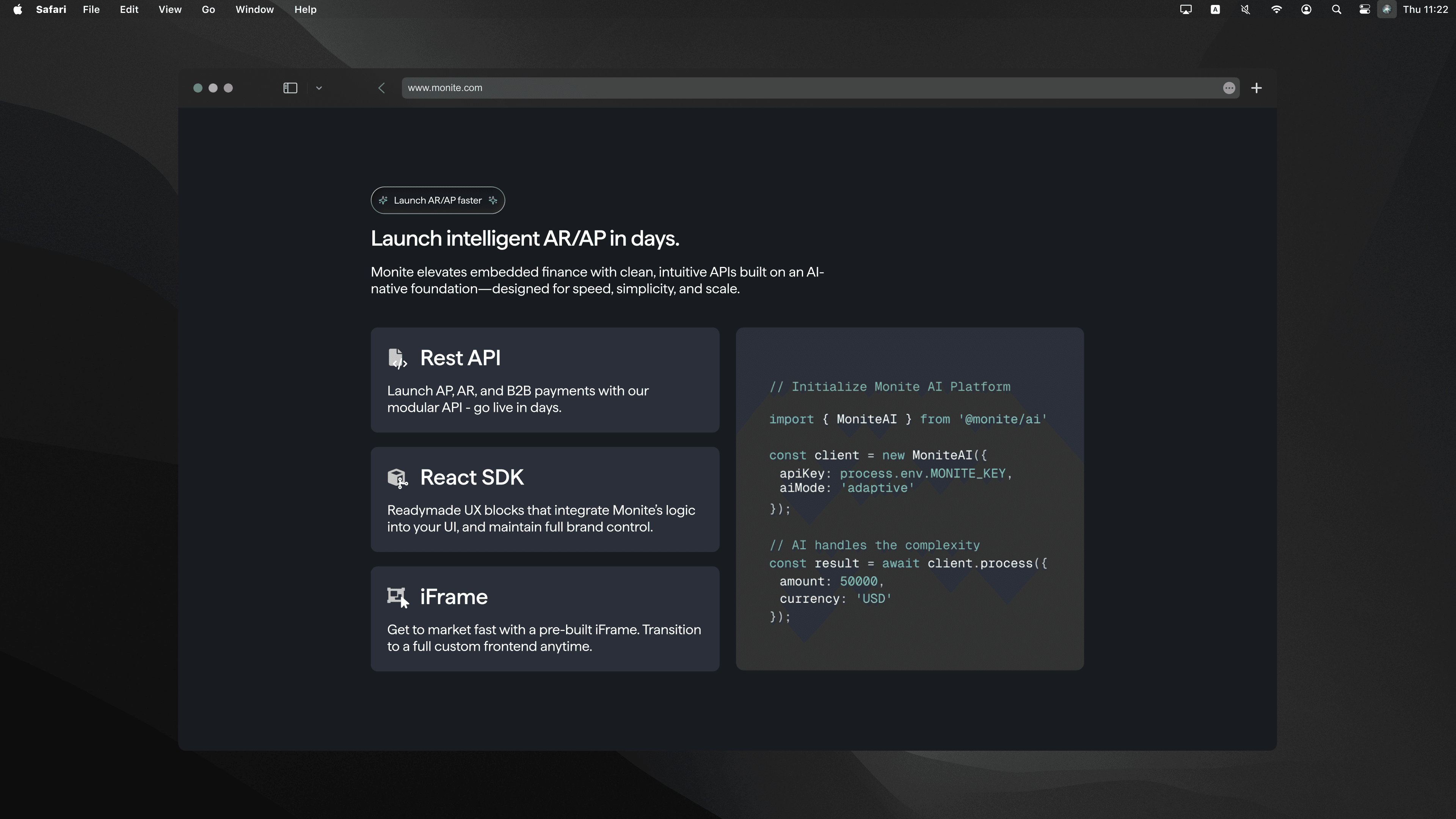
I led the migration from Material UI to a custom system built around ShadCN, Radix and React, working closely with engineering to align Figma components with production behaviour, tokens and theming.
Rather than maintaining separate ideas of the product in design and code, we built both around the same component logic.
V - Scaling (& acquisiton)
V - Scaling (& acquisiton)
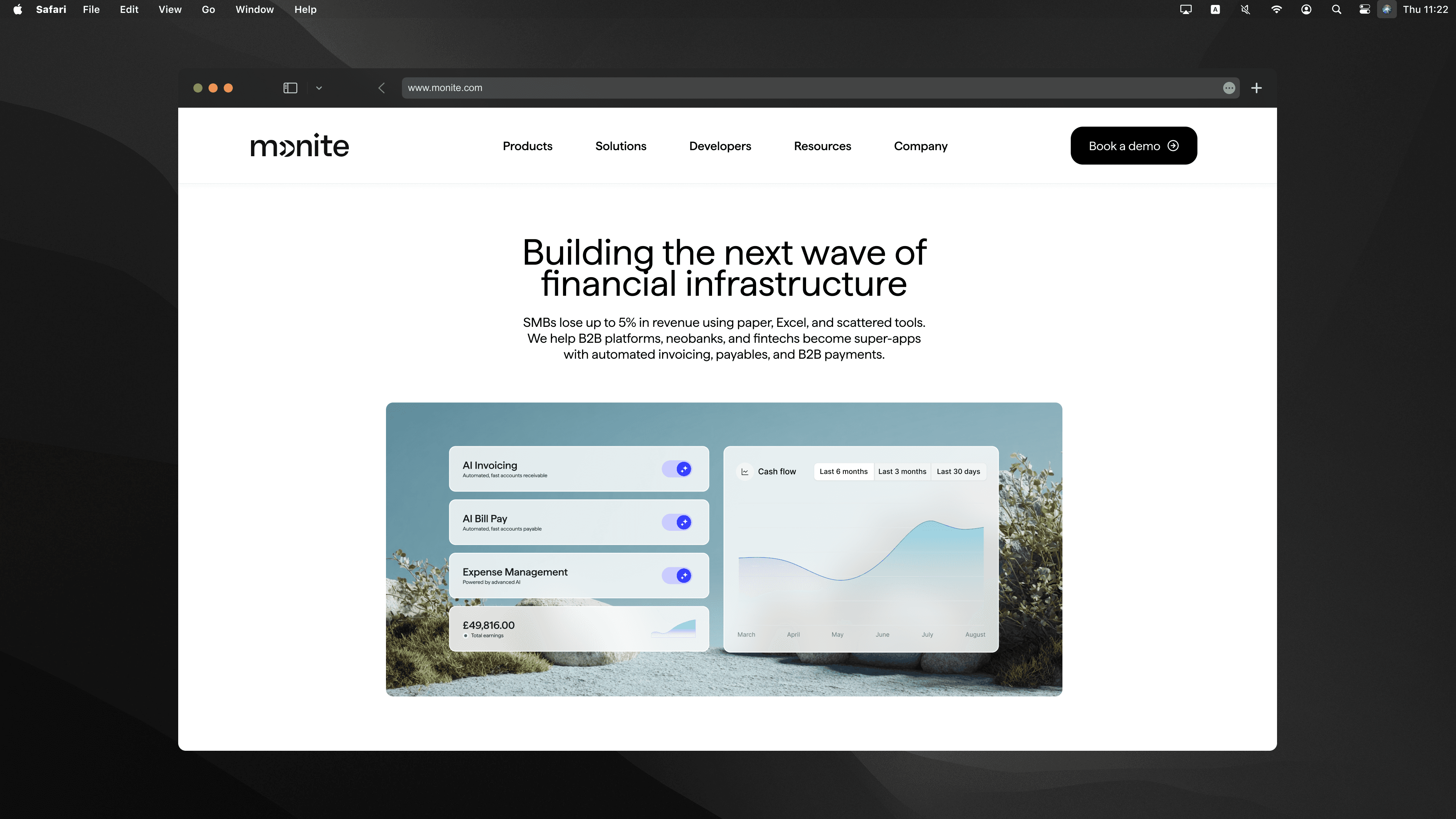
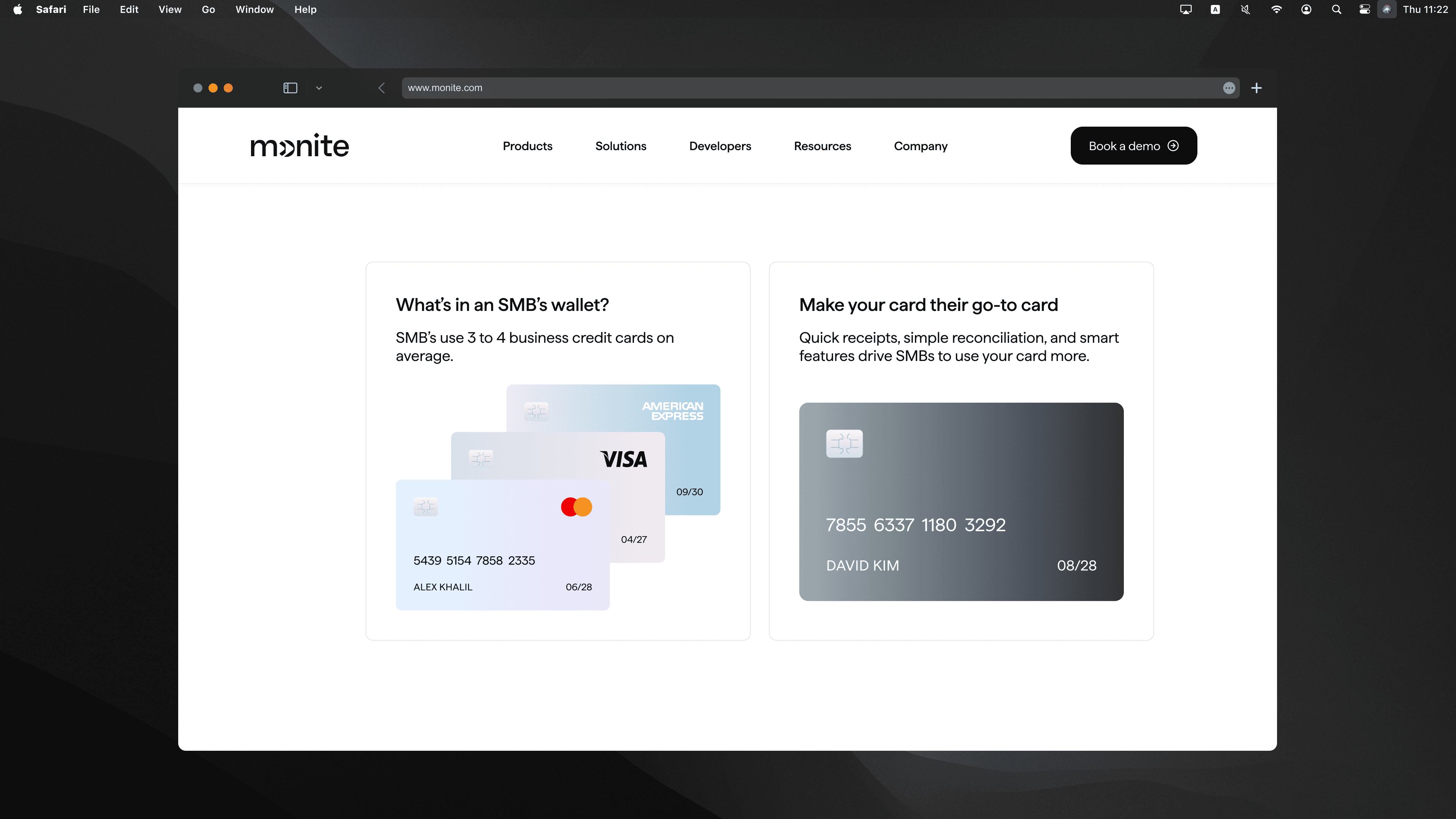
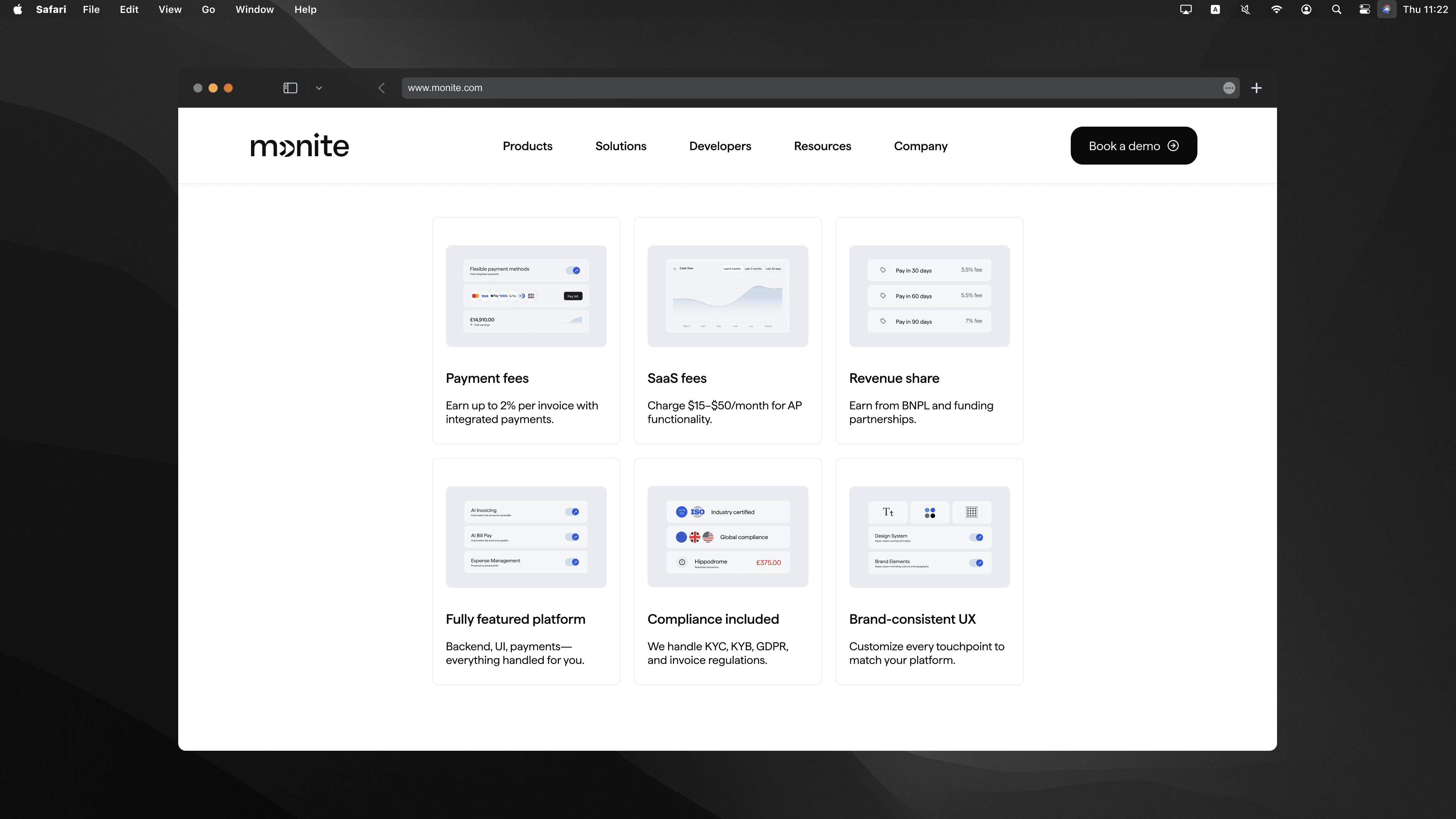
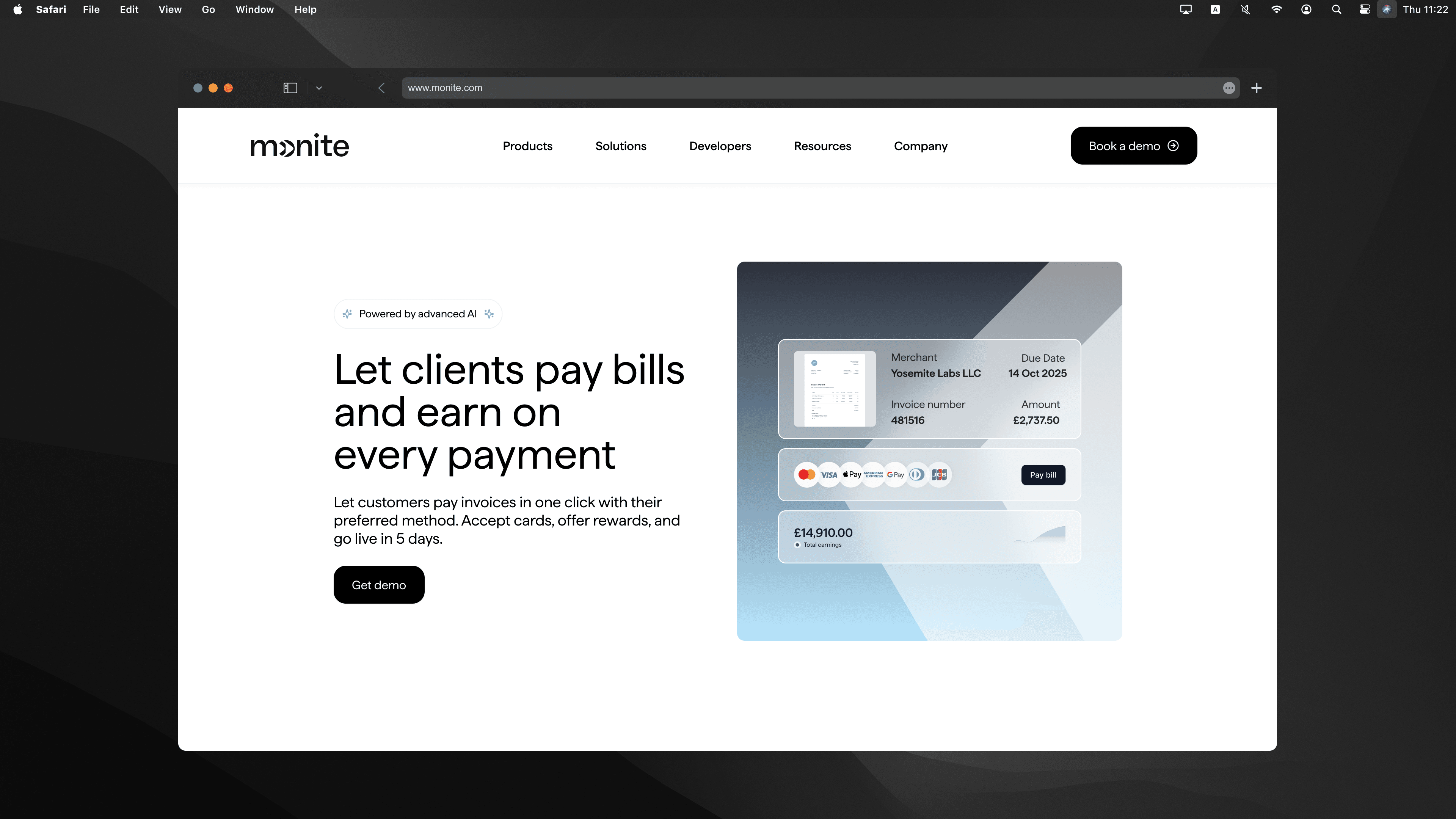
Alongside the product rebuild, I led the evolution of Monite's brand and digital presence so that the way we sold embedded finance finally matched the product we were building.
I personally designed and built all product interactions and animations to explain what was otherwise an abstract infrastructure proposition.
The website was designed and built in-house in under two months using a Figma-to-Framer workflow. It could be done much quicker now (Claude Code hadn't launched yet).
Alongside the product rebuild, I led the evolution of Monite’s brand and digital presence so that the way we sold embedded finance finally matched the product we were building.
I personally designed and built all product interactions and animations to explain what was otherwise an abstract infrastructure proposition.
The website was designed and built in-house in under two months using a Figma-to-Framer workflow. It could be done much quicker now (Claude Code hadn’t launched yet).
By the end of the work, product, SDK, design system and brand were operating from the same design direction.
Subsequently, following the OakNorth acquisition, I crossed over to build out AR/AP in their Business Banking solution.
6 weeks → 5 days
Partner integration time
2–5×
Customer earnings per user
90%
Faster client implementation
3–5 days → 3 hours
Client prototype delivery
1 week → 1 day
Design-to-code handoff